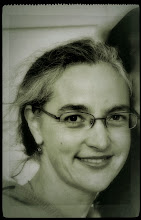
Tuesday, October 18, 2016

New website for "Housewife: Home-remaking in a transgender marriage" memoir


I am so excited to announce that I have a new website up at www.krisinkcollier.com!

Please visit and view my new book project along with reviews, excerpt, "Snapshots" and more!

Here's what people are saying....

Housewife is an uplifting and beautiful story that shows us what it means to love unconditionally and be honest with both ourselves and others. This book will capture your heart.” – Cat J. Zavis, Empathic Communication Trainer and Executive Director of Network of Spiritual Progressives

Partner and spouse stories are few and far between and are as different from each other as trans people's experiences are. Housewife is an inspiring example of how redefining ‘family’ can save a relationship. Reid Vanderburgh, author of Transition and Beyond: Observations on Gender Identity

“A must-read for anyone who is curious about transgender people and their partners but is too afraid to ask!” – Michael Thessen, author of Lickety-Split: Small Stories and Hysterical Fiction

*******

Saturday, September 1, 2012

City Rabbits


I have these rabbits. City rabbits for sure. The kids and Seda built them a pen to go to ground in – a pen that surrounds the hutch and a nice little ramp to take them to earth where they can dig.

That's what rabbits do, right? They dig. Home, hearth, food, all underground. They dig.

My rabbits dug a hole. They burrowed right into the center of the pen (good rabbits!) and did not try to escape. They worked every day, piling damp earth and rubble at its entrance. We watched the progress as deeper and deeper they went.

Then one day, girl bunny forced boy bunny down the ramp in a flourish and I swear this is what I saw: boy bunny jumped up and down on the ground over that burrow until it caved right in. No more happy home-to-be. And as far as I can tell, bunnies don't cry.

I'm over here in South Eugene, and I'm making home. I'm planting winter gardens and mulching paths, harvesting beans and fermenting them for cold-storage. I'm digging in.

But this year, I'm a city rabbit, too. We all are. The whole family. The boys are trying out public school again, both bravely stepping into their peer group in the most plebian sense – equal opportunity! Everyman's education. They know that doing so means that I can go to work (also in education) and we have a shot in funding Seda's surgery. We're all biting the bullet and working to meet our families basic needs.

We don't ask for too much, I think. At least most days. No TV, no Xbox, no regular vacations. We sign the kids up for sports, and that's a healthy stretch in itself. We eat mostly organic, including much that we've grown or gleaned. Our house payment is high (even for less than 1200 square feet), so we'd better make the yard pay.

Dandelions, plantain, and clover, none of it harvested by claw or tooth. That's what our rabbits eat. Enough to get by on and a natural diet, but not exactly the ways of their ancestors. Not exactly.

The rabbits have been digging again. City rabbits. They made another hole, and this time, they just kept digging. Maybe their GPS was off, or maybe their orientation was affected by too many commercial carrots (not a crop I've mastered). The hole went down then up. They built a tunnel.

Where's the home in that?

I've been planning all day for the social groups I'm leading at Bridgeway House. Hooked up a landline so the kids can call me when they come home from school with their latch keys. In case of emergency, now that I'm no longer available.

Where's the home in that?

It's a pass through. That's what the bunnies built. A detour, fun run, scenic route, temporary underground view of the rabbit world.

I dig in the garden to ground myself as the sun sinks weary. I pull calendula that I didn't mean to have growing next to the parsley. I tuck wood chips in the path next to the tomatoes. I have no energy for constructing supper, no patience for the indoors anymore. My twelve year old notices that in his 6.5 hour school day, they are allotted less than 30 minutes of outdoor play. Try explaining that. Is education healthy?

I know that a home-cooked meal would be very nourishing tonight, but I just need to be in the garden for an hour, just need to see the early autumn light reflected in dandelion puffs, eat raspberries from the vine. But the price for my reverie is now four take out burritos.

Where's the home in it? City rabbits.

Tuesday, June 5, 2012

Holding Childhood Together

"I want to buy those handcuffs, Mom," he tells me. "I know that you don't agree with that because they're cheap and you think I won't like them for more than a day, but...."

"But you don't care about that, you just want them anyway?"

"Yeah! I just want them anyway," he smiles, relieved. "It's my money after all."

"It is," I say. "And even if I don't like your choice, I can reserve all further comment."

"Good!" he says. "Thank you. And now, can you get them down for me? I'm not tall enough."

I suppress a smile. Why did the supermarket hang the cheap chinese handcuffs so high up? How many times have the keys been "lost" so that little brothers and sisters remained tethered to their breakfast chairs for days? I reach up and take down a pair of chrome-plated pot metal cuffs and hand them to my eleven year old whose feet are nearly as big as mine.

He must be on the verge of outgrowing these toys, I think. I would like to find the patience to make my way through this last stretch. But when will our spending habits ever perfectly coincide? Trinidad assures me point-blank that it is not wise to wish for that ever.

We load the groceries into the crate on the back of my bike. We load them into the boys' backpacks and into mine. There are too many boxes of cereal, jars of salsa, cans of beans, bags of rice. "Oh no," I tell them. "I think I may have done it this time."

I situate the gallon jug of filtered water this way and that to make room for a bunch of bananas that I suspect I will crush with my backpack anyway. Every week I test the limit of what I can actually bring home on my bike during our grocery expedition for a family of four. Every week it is almost too much.

This week it is too much.

"Mom! You can use the handcuffs to strap that bottle of water to your handlebars!" cries Trinidad, eyes shining. "I knew they would have a purpose."

I allow him to hook one cuff to my rusty handlebars and one to the handle of the gallon jug. We survey the set up.

"I think that the jug will give before the handcuffs do," he says. "But if not, I know it's my fault, not yours. I take responsibility if they break."

"You're on," I tell him, and we peddle off. Each corner we round, I say a breathless prayer to remain upright. Every wheel revolution, I am grateful that the kids have not accidentally swerved in front of me so far. The jug swings violently back and forth with every small adjustment in my steering.

We ride three blocks before the chain of the handcuffs snaps when I hit a bump. The jug skids out between and behind my wheels. Miraculously, none of us or any other oncoming cars or bikes hit the bottle as we coast into the parking lot of a shopping center.

"Oh!" Trin exclaims, disappointed. "Well, I guess they weren't the quality that I hoped they were. Now we know." He examines the break and sees that it makes sense that the cuffs would fail in that place, even though he hadn't seen it before.

"It was a good try," he says.

"A learning experience," I agree. And I watch as all the fantasy of boyhood collapses happily into size 7 sandals, an accepting nod, and then an impish grin.

"There's always duck tape!"

And so it was that childhood was held together just a little longer with a set of broken handcuffs and a roll of silver adhesive tape, impervious to tears and sun. I trust that he'll know when to take it off.

Tuesday, April 17, 2012

A Prayer Left on the Beach at Sunrise

I am part of this greater whole. I know that.

I  am all breath, in and out, or a heart beating the march of time as no mechanical clock can record. I am both the feet and footsteps of a people racing headlong into sunset.

Last week, the boys and I joined a team of conservationists (Save A Turtle) that track and protect the nesting of sea turtles in Florida. Twice a week, we will walk Smather's Beach at sunrise when the contour of the sand is most evident. This is the time of day for tracking. The wind is more likely to be still and the asymmetric, inverted commas left behind by passing loggerhead turtles will lie a little longer in cool and silence before jet skis and parasailers arrive.

Green sea turtles nest here, too. The green turtle's path mirrors itself, one side against the other, with a tail drag in the middle which deepens to form something like an exclamation point when the turtle stops to rest. If the path doesn't quite match up in symmetry, it could be due to an old injury -- one flipper sliced half back so that the turtle drags and swishes through the coarse coral sand in a path unique to its species.

If you have trouble identifying a track, and it is not a classic or text book case, our teacher says, "then don't dwell on the oddity of the track. Look for familiar signs instead."

Look for the familiar signs. Is that how its done?

Space travel, navigating stars and planets, moons and comets... just look for the familiar signs that lead to what you best understand. Look for the paths that make known territory out of the infinite mystery in which we live. Look for signs of life.

If I am faced with your anger, I must find in you the traces -- miniscule and vast -- of the love that I know. I will look to your hands and remember them soft. Your cheeks I will recall as they bowed in deep reflection, and into your eyes, I will look beyond the barricades. I will soften the way with my own gaze until I feel the depths I know, familiar and warm.

I will find my way through.

This is a prayer scrolled in the sand at dawn: Don't look for the oddity of the track. Look for the familiar signs, and you will know.

Wednesday, April 4, 2012

Another* Modest Proposal

Yesterday, while doing our weekly trash pick up at the estuary behind the Winn-Dixie, it occurred to me once more what a national treasure our children are. Watching my nine and eleven-year-old sons snake their slender bodies through the mangroves to reach for empty beer and vodka bottles, I marveled at their tenacious dexterity and the value of its good use in this application.

Still, I am aware that our family is but one small segment of the population discovering a hidden value and economy amongst us. I feel moved to make a proposal at large that includes the use of our youth in ways that they are often naturally drawn to and that may support us all in avoiding our rather unnatural demise as a race -- at least by weeks, months, or years.

Why not employ the children to clean up behind us full time? The empty beer cases, old shirts, shoes, and vodka bottles stacking up behind the Winn-Dixie do not mark an anomaly in human behavior and experience; there are circumstantial dumpsites in many gullies, streams, and empty lots near shopping centers. Why not have our children clean them up?

Children are small. Their bodies are built for shimmying up trees to grab flyaway plastic bags and crawling between bushes in search of wayward styrofoam peanuts. They are naturally compelled to hunt and climb -- I say, let them do it for a purpose! Adults let the wind and weather carry off to nether reaches what we casually toss behind us. The results pose too great a difficulty in the clean up. And despite the fact that we inevitably attempt to teach our children to pick up after themselves, little respect is bestowed upon the janitors of the world. Children generally are not seen as citizens either (how many public restroom sinks are built for people three or four feet tall?). Let them join the ranks!

Children have little else of value to contribute. We withhold them from the workforce lest they provide overmuch competition in our capitalistic hierarchies, and the test scores from public schools are reportedly so poor that our efforts in teaching and administration appear to be a waste. I suggest that we cut our losses and send them all outdoors where they long to be.

Surely, there will be concern for the safety of this venture. Despite the fact that we regularly use our children as laboratory rats in testing the safe consumptive levels of FD&C yellow number six and the like, we do profess a certain level of parental concern for our young as a whole. This is healthy and sound! We harbor this instinct to protect the future of our people.

I propose that we simply realign our strategies to meet our needs for sustainability. In light of the fact that we already subject our children to genetically modified corn syrup, endless electronic games, and artificial colors and flavors of all sorts, their genetic viability across multiple generations is already likely compromised. The greater problem we face at this moment is overpopulation. Forfeiting a few children to toxins received in the process of clean up or in the act of diving for submerged shopping carts would not be so great a loss when one considers how far this "pruning" puts us ahead in terms of saving humanity as a whole.

In light of sustainability and full circles, another significant advantage to employing our youth as litter patrol is that their time spent in clean up frees the adult population to consume and discard their trash helter-skelter as they please, thereby closing the loop so that our children do not ever "finish" the job and risk unemployment. Their work has a component of built-in security in this respect.

Finally, the use of child labor to clean up adult waste (of all sorts! Why stop at just litter?) allows us an unprecedented opportunity -- even a demand -- to show up in integrity. Our children will clean up the polluted world we are leaving them. They will inherit the oil-spills and extinctions that are by-products of our petroleum addiction. They will be left with the countless square miles of shopping bags that float in southern oceans like the unnatural ghosts of jellyfish past. They will take on the consequences of our consumption and our waste as it affects weather patterns and water rising, wars between people, and the collapse of biodiversity and sustainability of whole ecosystems. Why pretend anything different?

This is our chance to really show up for the next generation. So, let's do it! Pitch a wrapper. Drive a car. Employ a child. It may be our only chance.


*With all due respect to "A Modest Proposal" of Jonathan Swift.

Wednesday, March 14, 2012

A Tale From San Francisco

The boys and I decided to take the city bus to the Exploratorium. We boarded the transit four blocks from my sisters home in the Dogpatch and slowly rolled across the city.

I hoped that my children would taste the more complex flavors of city life by viewing San Francisco from the vinyl seats of public transportation. I hoped they would begin to get a sense of what "multicultural" means. (In Eugene, people of color are so rare that their appearance sometimes scares the dog.)

In our first ten minutes, a large black woman boarded the bus with her iphone blaring. I marveled at the sound she coaxed from that little machine. My iphone has never projected so well. I sat for several minutes bearing witness to her rap concert while other thoughts leapt from every available window in my head. Soon, it became clear that I could hold no interior conversation, harbor no dream or plan of my own in the presence of music at that volume.

I considered my options. Would I ask her to turn it down? I imagined that the request would not be warmly received. I expected that I would likely be seen as another white person demanding that my needs be considered first.

I understood and had compassion for such a response. How many generations had black people passed down the suffering of white domination in this country? I trusted that my family had certainly taken part in this grief-making, though the record of it was lost to me. I accepted responsibility for this, even as black people today shoulder the burden of pain passed down by nature and nurture and live their lives beneath the implicit weight of it.

I felt terribly sad thinking of the ways that cruelty has shaped black culture and opportunity across generations so that people of different colors who have never met could be perceived as enemies without even meeting. I mourned the pain that countless people of color have endured, the native cultures lost, and the struggle that many experience now to get their basic needs met in the fallout of a history of explicit and implicit discrimination.

I sat with that and made my peace silently. Several minutes rolled by. My children stared out the window. The bus filled. A few white people cast disgusted looks in the direction of the iphone which continued to erupt with expletives that I doubted that my children fully grokked.

A new thought emerged. What if I asked her to turn it down just so I could have the opportunity to connect? The request risked discomfort on both of our parts, but what if I was successful and a bridge was built? That bridge could be crossed by more than just she and I -- it might extend with good will on the next bus ride and the next. My children might see the model and brave the opportunity to connect with someone else who seemed similarly separate. The effects could be statistically significant. And best of all, I liked the challenge and the opportunity to see the heart of someone else apparently marooned in the seat across from me.

"Excuse me," I said. "I'm having trouble thinking with your iphone at that volume. Would you be willing to turn it down just a little?"

"No way, lady! Listen, I play my music at the volume I want to play it at and nobody's goin' to tell me what to do with it. This here's a public place, and I can listen to whatever I like!"

"Amen, sister," said a large black man slumping in the seat behind her.

"I want you to listen to whatever you like," I said. "I just wondered if you would be willing to turn it down to support me thinking my own thoughts, too. I see you aren't willing, and I'm okay with that."

"There ain't no foul language in this music. I know, because I have a kid of my own. The only people I'm willing to turn it down for are kids." At this point, she leaned forward and extended her hand toward my boys.

"You alright, babies?" she asked. They nodded quickly and emphatically.

"Y'see? They fine," she said, sitting back. "Now, I've had a really tough day, and I will listen to what I damn well please to listen to."

"Sure," I said. "I'm sorry you've had a tough day. Music helps, huh?"

"Yeah, I'll turn it down in a minute," she said and within a couple of seconds she began to press at the volume control with her thumb.

"No, don't do it!" called the black man behind her. "It's your god damned music!"

"Oh, thank you, brother, thank you," she said warmly. "This lady, she asked me so nicely. I'm happy to do it. Thank you, though."

"How old's your son?" I asked.

"Oh, he's fifteen now. And I always listened to all kinds of music around him. I played Mozart when I was pregnant. You never know what kids will like and maybe even want to play -- you might have the next Eminem over there," she said nodding to my towheaded children.

"Never know," I agreed.

"This my stop, honey, so I'll see you later," she said, scooping up her things and pulling the cord. The bus jounced to a halt and the woman's body pressed hard into the bar she held from above.

"'Scuse me!" she said with a smile to the man beside her, and she stepped down from the bus.

As we sped northward, a heavily pierced white woman two rows ahead of me said to her partner, "Well, at least someone is happy."

Now, that's my kind of ending.

Monday, March 12, 2012

Becky Thatcher

It happened on our first evening here in Key West. The sun dipped low into balmy skies as we walked, en famille, through our new neighborhood toward the Atlantic.

A block and a half away from home, I heard a sharp clapping sound, and I turned to see a girl of about twelve years old standing in the middle of the sidewalk staring back in my direction. Her eyes did not focus on mine, though her gaze was intent and her smile broad. I turned to follow it.

She was looking at Trinidad, now eleven and a half. Trin's flaxen hair rumpled gold in the evening light, and he guided a soccer ball casually back and forth before him as he walked.

"Trin," I said. "Someone's trying to get your attention."

Three more claps sounded as he turned to look. The girls smile widened more still, and her white teeth shone beneath dark, almond-shaped eyes. Black hair fell smooth and shiny to her shoulders, and her long legs hung gracefully straight under narrow hips. She sprang behind a telephone pole, and all we could see then were feet, elbows, and black hair wisps over bare, caramel-colored shoulders.

Trin looked to me questioningly. Two more claps issued from behind the telephone pole. Trinidad shrugged, one eyebrow raised, a half-smile on his lips. I grinned back.

"Remember this morning in the airport when we were reading Tom Sawyer?" I asked. "We read the chapter about Tom meeting Becky Thatcher, and how he was 'showing off' with all sorts of absurd gymnastics to get her attention?"

He nodded. "Well," I said. "That's the sort of show that's going on for you now."

Trinidad's eyes widened a bit, then he looked down, blushed, and smiled. Trin shrugged again and glanced back her way, shyly. The girl now stood in the middle of the sidewalk, feet planted wide, hands on her hips, smiling at him. Trinidad dropped his gaze, turned, and shuffled off with his ball.

I had the sense that I had just witnessed my sons first awkward steps on land all over again, this time in initiation to the threshold of romantic awakening.

A prayer of thanks went up that I got to see it happen ~ sunrise, sunset.

Wednesday, March 7, 2012

Key West, On The Dark Side

Cayo Hueso, the bone Key. You are full of bones, Key West. Dry coral does not give beneath bare feet. Broken bottles lie like smashed skeletons on asphalt -- the death of a civilization prone to excess.

The wind here is a siren song. It calls warmly to passing ships of air and sea: come hither! The people arrive, brightly clad, with bags of many colors.

Oh, what we will carry! Maps we bring -- human roads printed on paper in the hand as deer leave their paths in dirt and in their blood as memories to kin. We drive our sacred paths on motor scooters or in lacquered cars, petrol fogging the clean sea air. Liquified bones we pour into sky: This is an offering we burn without thanks.

My apologies to the gods. Our vision is obstructed. These sunglasses allow in a comfortable amount of light, and our bodies have forgotten how to tighten a retina, pull an eyelid taut. The human experience is honed by that which does not belong to it. We are not quite ourselves anymore.

Cayo Hueso, land of bones. This is not the whole story. The land here teems with life, but bones emerge at an ever alarming rate. Decades of life in a coral reef knocked apart with the touch of a well-meaning hand or the accidental strike of a jet-ski propellor. Sea life, more abundant than most, appears to thrive, but how abundant is it compared with that of a century past? The colorful underwater carnival is eclipsed only by its rate of decline, bones collecting in estuaries behind the Winn-Dixie where we watch horseshoe crabs mate.

Like the Spanish, I ask myself: Who does this tropical graveyard belong to?

Tuesday, January 17, 2012

A Tour of San Francisco

I am visiting my sister with the boys at her home in the Dog Patch district of San Francisco.

Today, we take a tour of Chinatown before noon so we can see the fortune cookie factory in operation. We park the car several blocks away after looking for a space for over fifteen minutes. This is the first and least obvious lesson offered by urban life. Stowing the vehicle that got you here takes time and effort. (Good luck with that.)

The walk is a colorful one. Live fish slap around in deep trays, eyes bulging, as water is sprayed in to keep them alive. Fresh flowers, ripe and round citrus, green peppers and prickly golden fruit are mounded high in crates while men and women pick through them, talking, talking, talking in a language that is foreign to us. Trinidad and Sam turn their heads from side to side taking it all in.

"There are so many people!" says Sam.

"We'll have to take a left on Chaos before Jackson," says Trin.

"We're stopping here for coffee," says Robyn. We have one hour on the meter, most of Chinatown and half of Little Italy between us and the fortune cookie factory. Surely there's time for everything. We duck into the Italian bakery.

Yesterday, Sam was sick but slept and is now well. I'm fighting a cold and know I'd do better to eat my greens but... authentic Italian pastries? Hippie health must take a holiday. I buy a chocolate croissant, Sam gets a strawberry and cream danish and Trin has a hot cocoa. Robyn gets her coffee and a macaroon. It's all divine.

We walk on to Ross alley and discover our destination. It is a factory that appears to be composed of a 600 square foot room. Four women sit at stations where cookies slide off hot irons in round discs. The women grab a fortune, press it to a warm disc and bend the cookie around a string to fold it into shape. A sign tells me to pay fifty cents if I plan to take pictures. We give the man two dollars. He has been very generous with offering cooled flat cookie rounds our way. He nods graciously at my offer.

"How long has this place been here?" asks Robyn.

"Fifty year!" says the man.

"How long have you yourself worked here?" she asks a woman.

"One day!" says the woman. When we laugh, she looks flustered and asks us to talk to the man.

"Fifty year!" he repeats emphatically. She is clearly younger than that, but much can get lost in translation. Or perhaps she always gets the best fortunes?

Robyn digs for cash to buy a bag of "adult fortune cookies" with naughty fortunes inside. We agree to split the cookies. She hesitates, embarrassed to ask the man for them. He grins broadly and assures her that they are adult fortune cookies, chocolate and vanilla. We make a point to separate that bag from the one I buy for the kids.

We are tempted by Chinese candies and wooden swords on the way back to the car. We buy more candy than I have all year as I am suddenly nostalgic for edible rice wrapped gummy delicacies like the ones I ate as a child. The boys are in shock when they see what I've purchased. Is it tourism? Am I under the influence of my sister, or are the two of us (so rarely together) suddenly recreating our childhood to pass on to my boys in imported sweets?

We move the car and climb the hill to Coit tower on foot with our sugar highs in full swing. The boys look out over the bay in all directions. Only for a moment. Then they are fixated on the foreign coins that have been set on the outside sills of the locked windows. How did the coins get there? Who left them? Could they somehow squeeze their hands through the opening and take one, just one? More perhaps? Such beautiful foreign coins! The view is disabled by this novel diversion.

I stare out at the land around and walk the perimeter of the tower in a slow circle. Alcatraz island brings me back to a tour of the prison I took in seventh grade. The Marin hills remind me of Ben and his days playing the piano many years before I knew him. The boats remind me of so much water and the desire to command it -- boats from childhood, boats I was learning to sail, all dreams that lap in and out at me like the bay itself gently tugging at my heart.

With irritation, I hear the boys still discussing how they might get at the coins. The yearning in their voices rankles me. I express my frustration with their focus on the sill when so much beauty stretches beyond under a bright blue sky. But here I am, myself counting the tangible coinage of my past from the top of a tower so tall. What did I see that was new here? What am I learning from my view?

The boys and I distract each other from our perseverations. We shake ourselves into interacting with one other, with the cypress trees below whose tops are blown flat as if they'd painted the sky too roughly. I see my sister, tall and beautiful and quiet. We have been appreciating each other, seeing and hearing one another in longer stretches. This is something.

We descend the tower, each lost in our own thoughts. Maybe a view is just a view, and a vista point is a place to see what we have to let go of while we also celebrate what we've ascended. Perhaps the pinnacle offers us an opportunity to look down at our own expectations and the ways that we isolate ourselves from one another and the world.

And maybe, from that vantage point, I felt a little lost for a moment. All the nostalgia and fortunes in bagged cookies across the city could not save me from my own inner chaos as I ascended that place and sorted it out. It's all mine.

Perhaps the finding has to start with being lost somewhere.

Sunday, January 15, 2012

Superhuman

Falling in love gives me superpowers deluxe. I hardly recognize myself under the cape.

In the glowing light of dawn when I should appear rumpled and haggard from lack of sleep, I turn my face to the light and receive it as my own personal blessing for the day. All is beautiful. The wrinkles fall out of my clothes, my eyelids, my memory, and I imagine that even my breath is not as bad as it might seem.

I wake the children with a song, and while I haven't been making the time to practice guitar (some things have to give), my voice rolls forward like liquid gold to dazzle them through the disgruntled waking hour. I cannot be shaken.

I sweep and vacuum the house in a snap before they have stumbled out, rubbing their eyes. My inner drummer keeps time at an ecstatic pace while I look with a fresh perspective at the pieces of furniture I haven't dusted in a year or more. The toaster oven needs a cleaning, inside and out. Had I scheduled it all, the tasks would be a drudgery or a bust. How could I get all of that done, find time to snuggle the boys, and pour a sensual email out to my new treasure?

I do chin-ups to impress Him and manage to complete four. In the rosy haze of rookie love he marvels that many men cannot do one. (He himself is an exception, but he rather uses his superpowers for dancing just now. I have to think to remember to breathe while I watch him.)

I create time! We talked for more than eight hours last night and we didn't get together until 5 p.m. It's a whole day on the calendar that I crafted between Saturday and Sunday. Let's call it Loveday.

I create space! My eyes train on him, and everything else melts away. I do not test this by attempting to cook dinner at the same time as being in love. Kitchen timers are not the sort of thing it is wise to neglect. Such an act could also contribute to spatial collapse on certain levels when dinner appears charred and less than rosy. So ... oh well! Superpowers offer clarity: Dinner or my undying attention -- one or the other!

I see into the future (or just think I do)! And it's swell.

I see into the past: My vision is 20/20, and it all makes sense. That's how we got here!

Best of all, I have patience beyond belief, stretching out past the hems of my shimmering, heart-shaped cape. (Yes, it really flies! But not while I'm in it.) I see the best in everyone, and all is forgiven.

Wednesday, December 14, 2011

Snapshots, Nearly Solstice

I wake up and study voice and guitar until my fingers and throat are feeling worn. I'm fighting a cold again. This music thing is a marathon before me, and I only just got the shoes. Beginner mind is supposed to be refreshing and insightful, I think. But my mind is preoccupied with mourning. I write to a friend and tell her all the things I think of doing in my weakest moment, which is now. I feel better having said them.

"I can't think of what to write next in this story!" Sam shouts. "I just can't."
"Sit with it," I tell him. "It's Spirit coming through you. Just quiet your mind, open and relax. It's all there." I wonder why I can't open and quiet like this in my moments of despair. I think I might be peeking through some sort of tear in the fabric now, because I do hear my words and wonder at them. I am not alone in the struggle because we are all trying to sit with what is while what's next rolls in. So much uncertainty.

I suddenly cry hard in the kitchen and both boys come to comfort me. I miss my Mom. It's Christmas without her. I sob and sob. Trinidad tells me in his young man voice to let it through, it's all right. He rubs my back. I see their care for me as a reflection of mine for her and I cry harder. Sam tells me to take my time, everything else can wait. Sit down. I can do nothing else. When I am done, I get us all some chocolate. We agree that it is good.

I am sitting on a chair in the kitchen, wearing an apron and holding my guitar. I am practicing Ode to Joy over and over until I'm not sure I like it anymore. The dog sits at my feet and stares up at me as if I were Jesus. I wonder at her taste in idols. The pressure cooker hisses above my melody.

All of this is inextricable. How can who I am be anything but what I do in this season of my life?

Friday, December 9, 2011

To Work with the Dead

The moon is not a difficult thing to love. Even behind a cloud, it is soft in its gaze, always poised at the edge of its seat looking down on me. I see it tonight, and I am moved by its patience, its ever-presence, its spirit in my world.

Sometimes, I forget it hanging there. There are weeks that I do not go outside at night. I bristle against the cold, the damp. Sometimes I forget that even in the rain, the moon sits it out, waiting. When I see nothing but darkness where the moon should be, that pale golden globe holds its place in the sky, singing its silent moonlight song. Even in total darkness, it does not forget its purpose.

I wish I was so steady in my way. I wish that the cosmos had gifted me a heart that trusted light to come and come again, stretching across the darkest canyons of my love-in-waiting. I wish I could touch the stardust in me now, know that I am spinning, spinning, spinning for good reason. All for the blessing of darkness in light.

The trees stand solemnly still in the sky tonight, bare bones lifted high into the mist. I am here beside them, my cheeks chilling as I sweep the last of the leaves up from the driveway. I have borne the rest away to my garden where they blanket the cold feet of naked bushes and trees. Now I stand in the dark, afraid to go inside and return to my human existence.

Here, I am cool and wet like the leaves themselves, tall and dark like the willow. I, too, am waiting for spring. I stand awhile in the rose arbor. I pause to allow the experience to be, this waiting and watching upon entering one space as I leave another. I can go back, I can always go back. The willow laughs at my observation. She doesn't see any going back. She just sees me under the arbor.

I make this human gate, this threshold for transformation. I make it for myself. It is my axis to turn on. I pray for the light to be remembered in me. I receive the damp offerings of earth and sky. This is my home.

I am always reminded of these truths that run far deeper than me when I move so many leaves. It is always a blessing to work with the dead.

Saturday, December 3, 2011

In Honor of What

I bought myself some new dancing shoes, and tonight, I took them out for a spin.

Reentry into the ballroom scene is not so very difficult in most ways. I find my cubby, stash my cycling boots, and slip on my new jazzy black slippers. I look around not-so-obviously at the selection of potential partners while they look not-so-obviously at me.

I remember how this works. New fish in the pond are the first to be caught. Often enough, they are also tossed back when -- oops! -- they forget the steps to the west coast swing. Never tossed mid-song. Well, almost never; I think it only happened to me twice. But at the end of a song, you can feel your partner's disappointment. He wears it like a leaden yoke, and it's painful for him to fully raise his head to look at you politely as a gesture of goodbye. You must pardon my masculine assumption here (the "he"); all of my women dancing partners I've had to invite personally.

Okay, so I am perched on a step, prepared to be caught. Snap! It happens. A swing dance first. My favorite, and not too hard to piece together. Then, something called a "Night Club" follows, which sounds more like a drink than a dance. "I don't really know this one," I say, smiling sweetly.

My partner takes me out, a fine lead, and I pick up the dance more quickly than I thought I would. The first time I get the basic steps without tripping over him, he nods and says, "Okay, now let's try something different."

Oh, right. Just when I get the basic down for the first time? Now we're switching it up? So we try something different. After a couple of turns, I get that, too. He is delighted and jumps into a new move which leaves me criss-crossed on the wrong side of his arms. He looks at me sideways and says, "Oh, don't worry. It's probably the hardest move in this dance."

Excuse me? That's supposed to be reassuring? What makes you think that's such a great idea, I wonder, trying out your most difficult move when I've barely got my feet moving in step with you? Brilliant. I am set for success.

One older gentleman whose name, Helmut, is embroidered on his official ballroom dancing sweatshirt, tells me under no uncertain terms that a woman must follow and the man is totally in charge. Modern women, he says, have a hard time with this. I wonder if he thinks I am intentionally trying to gum up his grace in order to bolster my feminine independence. I look at him cock-eyed. "Is that supposed to be a hint?" I ask. His confidence ebbs, and the lecture ends.

They keep asking me to dance. Each time, I warn them that I haven't danced much in the last decade. Some believe me and take it achingly slow. Others think I'm being humble. If they are a strong lead, I keep up. One fellow just a little older than me learns quickly that my warning especially applies to the tango. He walks me through it counting aloud. We do okay.

Then he starts talking to me. My lips work better than my legs, so they take over, and my legs fall off. Well, not entirely, but it is kind of a drag for both of us. It takes him a full turn around the floor to understand the problem and stop asking me questions. He then has to go back to telling me which foot to move: left, right, left, right.

Okay. Good again. Then he asks me where I dance when I'm not dancing here. Ummm.... really? Aren't you the guy who just taught me my right from my left? "Because there's a dance tomorrow night at the Eagles Club," he tells me. I say I'm going to the concert of a friend of mine instead. He looks disappointed. The dance is over.

One man asks if I do the Silver Waltz, and I tell him that I did once. He tries me, and low and behold! The feet remember. I recall as if it was yesterday practicing this dance while walking my dog down the bark-o-mulch path at Alton Baker park. (Yes, there was trouble with the leash.) I am so surprised to remember the steps that I almost share my celebration. Then I recall how well talking helped my tango, and I keep my mouth shut.

Another man asks me to dance. "Err... what is it?" I ask. "A merengue. You can't mess it up," he tells me. Now there's someone who's been watching, I think. We take the floor, and I do remember how to look sexy squishing grapes with my feet. This man is charmed by my flair. He asks me to dance the next waltz. For some reason, my legs don't go with his anymore, and he is irritated. It's simply a progressive waltz, he says, but I can't seem to remember which leg goes when. I suspect he thinks I'm a great dancer who is disabled just for him, just to ruin his waltz. Perhaps it is so. He gives me a very sour look. I widen my eyes and smile.

A fellow insists on teaching me the West Coast Swing. I appreciate his patience, actually, and his counting aloud. He asks me to teach him the rumba, which I manage to do, just barely. I tell him that I'm rusty because it's my first full night dancing in a decade. "Oh!" he says. "In honor of what?"

In honor of what? How do I answer that? "Transition," I say and look away, hoping he doesn't ask more.

"What kind of transition?" he asks. This is officially not small-talk. This man is fired.

I look at him blankly. One-two-three, one-two-three. Why have I not danced? Transition of my husband into a woman? Transition in and out of two more relationships following? Neither of them rooted, and never a real space to be single, or at least singular, in between...why have I not danced?

It's a transition, I think, in honor of What. Just as he said it. But that's not the pat sort of answer that's allowed on the dance floor.

Nevertheless, it is worth a new set of shoes and an evening of laughter, missteps, and sweet memories lived aloud. In honor of What.

Thursday, September 29, 2011

The Saints Preserve Us!

Opening line of our homeschooling day: "All right, boys. The electricity has gone out. It won't be back. And I'm not your mother."

Sam looked horrified. "I'm some stranger who just walked in off the street," I told him quickly. "I heard you grew tomatoes this year and that your mom used to can, so I'm hoping you can teach me." The wheels began to turn.

"What do you need to can?" I asked.

"Jars. The jar pot, tomatoes," said Trinidad.

"What are the dangers of canning?" I asked.

"Broken jars, getting burned," said Sam.

"What about the long term dangers?" I asked.

"Poisoning!" they said in tandem.

"Right. And what could cause that?"

"Bacteria!" said Trin.

"Yup," I said. "That particular bacteria is called 'botulism.'"

"Botulism? No way. I thought that was a religion."

So went the Socratic lesson on canning today, heavy with sixteen quarts of tomatoes that the boys harvested and cut up from our garden. As we stewed over the details, the rich, red sauce simmered down to a precious seven quarts. I helped stir the pots as we discussed what could be a hospitable environment to various bacteria and what inhibits their growth.

Then, we went a different direction with our preservation and lacto-fermented five quarts of cucumbers that Trin and Sam picked in the garden. All of this with only some instruction (and many questions) from me! They peeled the garlic that we'd harvested in July and plunked the white bulbs into jars with proper measurements of dill, mustard seed, salt and whey. They added water and voila! A work of art that feeds the family. A living food that fends off botulism with its own vitality!

A lesson plan you can eat.

Tuesday, September 27, 2011

The Beautiful Failure

Today, I watched as two twelve-year-old boys worked together to build an aerodynamic car that could soar twelve inches off a press-board jump to land in a basket of blocks. This effort was at once humble and Herculean in stature.

The boys considered the track they built: Should it have sides? Should it be taped? Should it contain the plastic official Hot Wheels track? Together they sculpted a vehicle: weight, wings, propulsion, aerodynamic design. Their ideas toppled out into the space between them, then were considered one by one from all angles. They asked for more tape, paper, and elastic. I brought them balloons in lieu of rubber bands, and they used them sling-shot style and as wind propulsion for a vehicle that first looked like a car-plane, then a car-biplane and finally like a car-biplane-sailboat as more and more Lincoln Logs were taped into place to firm up the paper sails and wings.

Sideline experiments took place: Paper airplanes were tested for aerodynamic design to be incorporated, alternative materials and pathways were put into place for a smoother, more effective track. They shared the creation in all ways from inception to closure.

And they pronounced it a failure.

They did not offer this observation in dismay. It was merely a fact, stated plainly as one might observe an overcast day. Nothing to spoil anyone's picnic, but not the hoped for outcome either. One boy told the other that they needed to have a playdate again soon, and this was agreed upon heartily.

What can we make of it? Is accomplishment achieved after successful trials or after many highly creative ventures? Is there a different sort of accomplishment that is born of each?

I remember, as a teenager, deciding to spend the day building a raft that my girlfriend and I could float onto our local slough. It was a rather strange idea from the get-go; neither of us had any building experience, and we never would have dreamt of going out in the mucky, highly polluted slough on any other day. We somehow did not compute that the project might entail getting wet.

I remember that we hauled to the water's edge something that resembled a souped-up pallet. The slats would obviously let water through, but in a moment of unsinkable pride in our creation, I volunteered to be the first to push off on our "boat."

It sunk.

Not too deep. Up to my waist in brownish-gray water and up to my calves in suctiony silt, I determined that I had merely mounted the vehicle incorrectly. Giving the thumbs up to my girlfriend who watched wide-eyed on the bank, I clambered aboard from the other side and managed to stay on top of the wooden flat, even as it sank a few feet below the surface. In this way, I effectively deep-water surfed downstream.

I remember laughing. I remember the weight of my overalls moving through the muddy water stiffly and the moment when I realized that my head, too, was going to go under. The event is elevated in my memory -- relinquishment in the face of ecstatic creation.

It did not matter that my boat did not float. The entire venture became a sort of performance art. The gray sky laughed down at the brownish-gray me, and we were one in our mirth, awash in the bowels of creativity.

I always wonder, no I sempre wonder (Italian captures the longing in "always") what the goal is, anyway. We humans measure our efforts and our accomplishments neatly into units, indeed we measure the value of a creature, of a soul this way at times. For what are we but the energy that finds its path in the world, creating and being created? Who are we to measure the value of outcome when the means itself is born of our deepest truths, our perfect grace?

The boys saved their car-biplane-sailboat for the next passersby to take note of -- a monument to  creative failure.

I myself am humble witness to the wonder.

Wednesday, September 21, 2011

Work

There is the kind of work you do that has an end: a sinkful of dishes, sweeping the kitchen floor, scrubbing the fingerprints off the door jamb (I don't think I ever do that).

There's the kind of work that eats you up so that you forget you have feet, eyes of your own, children even: working the beehive, working in the classroom, performing onstage.

There's work that you do with joy because you nest it among the things you love: mowing the lawn while blasting the soundtrack to My Fair Lady at dusk, paying the bills with a good cup of Chai tea, doing a boatload of dishes with a friend who really has something to say and an amazing ear for the listening.

Then there's that bottomless sort of work that threatens to pull you down with it: a case and a half of tomatoes, a huge bag of onions and forty jalapeno peppers that ask to be salsa'd in the day before you fly to Kansas at four a.m. the next morning.

You look at that kind of work and you wonder: How? How am I going to get that done? My Fair Lady is to friendly and fair, no one seems to have the ear you're wanting to share with, and it is impossible to pace yourself with landmark "endings" (I'll give myself an hour to do the tomatoes, thirty minutes for the cilantro...), because you really and truly have no idea how long any of it will take, whether you have all the correct amounts of ingredients the recipe calls for (my God, you'll kill your family with botulism if there are two too many peppers), and if, in fact, you contain the moral fiber to get through a job that contains so many unknowns.

The tomatoes wash like this: one shiny under the running tap, two so little dust, really what's the point, three how deep is this basket of tomatoes, four it doesn't really matter when I'll never see the bottom, five inhale, six exhale, seven inhale, eight exhale, nine there's no other way, ten exhale, eleven....

But onions are bound to make you cry. And after you cry, you realize that all the confusion that sat planted in your mind, in your heart, was just a boulder waiting for gravity and a rain of tears to send it slowly onward, downhill, and with a whoosh, you find that there was meaning, there was peace in your relationships with all those people you were afraid to call while chopping.

You call them to you, tell them about your celebrations, your fears, your confusions, and they listen and share their own. It's all the truth, and then there is an end to tomatoes, to peppers and to onions (lo! those friends shared your table and a knife, chopped beside you). There is an end to cilantro and garlic, and while you forgot to purchase bell peppers (you never could grow them), the store is still open and you can stop there on the way to picking up the kids from soccer.

Everything falls into place in that cosmic gospel way and everything makes sense, everything comes together so that you can see it all has an end, all a point of closure for celebrations and mournings.

It somehow doesn't matter if the salsa ever gets finished, though it will, of course. And we will keep picking up our work again and again, harvesting, preserving, and searching for the things that feed us.

Because it's good, work.  Yield: 16 and a half quarts.

Wednesday, September 14, 2011

The Sometimes Difference Between Boys

NVC Family Camp, Vashon Island. The dinner bell rings. Trinidad sits bolt upright in our tent and snaps his book closed.

Trin: That's the dinner bell, and I've vowed to myself to always be first in line for every meal. (He unzips the fly and leaves the tent.)


Sam (sitting up slowly and reaching to move a lock of hair from in front of his mother's face): That's the dinner bell, and I've vowed to always be right where I am. And that is a vow I will never break.

Saturday, September 10, 2011

Into Light

According to Sam, this is what is needed to gain a new skill: Experience and experimentation. He is satisfied with this assessment and not drawn to say more about it.

But I will. Experience we amass from birth, perhaps before. Experience guides our experimentation, gives it the wings of angels to teach us what we most need to know, whether we like the outcome or not. (Do we experiment in our first moment of awareness, or is experience that awareness simply put -- the tabula rosa of our existence here on Earth?) Ongoing experimentation is a way of pulling ourselves forward, integrating yesterday with tomorrow in this only moment we are given: Now.

Our experiments are the seeds of plants well established. These are not new skills we are "gaining" -- they are fully realized abilities that we have always harbored, waiting for the season in which they are to emerge. And so we root, flourish, and flower to give seed again and again, realizing the divine beings that we ever are.

I watch you, young Sam, with eyes that strive to take in your whole being, your living potential, your infinite Being stretching into light. And I honor the learning I experience in your hands.

Friday, September 9, 2011

Help Where You Need It

At 12:15 p.m., I weighed the dilemma in my head: lunch, housecleaning, soccer games. How could I time it all "just right" so we didn't get cranky with each other before lunch or after the soccer game? I needed help.

"Boys," I said, "we have to leave for the soccer game at 3:30, and I'm guessing that you don't want to have too full of a stomach -- maybe eat an hour and a half ahead of time? But then, there's the house cleaning that we were going to put off until 1:00. We'll need to be cleaning in that window if we want to eat later. And I don't know how hungry you are right now."

"Yes, eat at 2:00," said Trin. He walked out of the room and headed for the vaccuum cleaner.

Sam hugged me and looked a little mournful. "I wish we could do something fun for a reward," he said. We usually set ourselves up with something preferred to follow housecleaning which does not yet rank at the top of our favored projects list.

"Well, you could use my iphone for awhile if you like --" I started, but Trin cut me off.

"No!" he said emphatically. "We've both had way to much screen time lately. It's time we did something else."

"Oh, okay," Sam acquiesced. He took out the broom.

In the time it took me to wash the dog and clean the bathroom, they had double or triple swept to my standards the entire house (thank God it's only 750 square feet). Trinidad decided he would walk up to the store and buy himself some ice cream which he is likely to share.

Do you know what a relief and joy it is to share with my children the chores that keep our home orderly, functional, and beautiful? And perhaps moreso, it is a delight to share the orchestration of these tasks, to know that we all take part in the same plan of activities that meet a great many of our needs, and that we are willing to stretch together to do the less-preferred activities that make it all possible.

Taking in that celebration.

Let The Piano Play Itself

I ran my first formal homeschooling day with the boys yesterday. We studied Spanish, gardening, the human skin, multiplication, writing, watercolor, and Chaucer. I worked on the piano with Sam, opening my heart to his despair and terror in the face of all the music he's "lost" over the summer break. We did yoga and played Rat-a-tat-cat. In between, I got a chicken in the slow cooker, fielded grocery acquisition calls, and contributed to breakfast, lunch, and clean up.

At the "end" of our day, there was laundry to hang and fold, calls to make, a cat who needed first aid, and my bedroom that needed first aid after the cat's ongoing abcess drainage. The cucumbers were ripe and ready for pickling, the garlic needed to be hung, and the aronia berries begged to be harvested. Most horizontal surfaces were heaped with Lego, playing cards, clothes or dishes, and I am scheduled to teach a workshop here on Sunday.

I hung out the laundry piece by piece. This job usually belongs to the boys, but I wanted to give them a chance to play and integrate after a pretty intense day. I strongly wanted to contribute to their needs  and at the same time, I was tired, overstimulated, and confused about how to meet all of the needs on the table. In addition to my household and home business tasks, I've taken on outside employment that I need to finish prepping before Monday. Whew.

I lifted one wet piece of cloth after another. How will it happen? I asked. How can all of this possibly get done when I am so drained, so empty? There are not enough people, there's not enough time....

"Let the piano play itself." The words returned to me from years past when I studied piano with Ben. He told me that if you allow the piano, it will push back at you after you press each note in order to return to its original position. You may receive its energy and use that impetus to play the next note. The image that Ben shared shaped the teaching of my workshops until, now, participant energy carries me elliptically through my workplay so that presenting workshops is a joy.

I shook a damp blouse in the sun. The cotton rubbed against my fingers, pregnant with water from the washing. Clean. I let the sensation fill me. I looked across at my garden, a forest of selectively cut lettuces and kales amid tangled vines of tomatoes and cucumbers. Their jeweled colors threw the sun back at me. I opened my eyes, my heart. I took it in. The laundry drifted between the basket, my hands, and the wooden rack. Effortlessly, one piece after another found its place in the sun. I breathed in with gratitude the blue of the sky, the sound of my children playing.

"Can I help you, Mom? To make it go faster?" Sam asked at the back door. I smiled.

Today, I am taking in the beauty of the day. The crows playing in the park have fueled my pedaling to the bank, the store. Trees have waved me forward, cheering, to discover the next bit of chaos 'round the bend. The sun glinting in Trinidad's honey colored hair reminds me that we have plenty of time to get to the soccer match.

Time may be all we have to measure out the giving and receiving of our love.